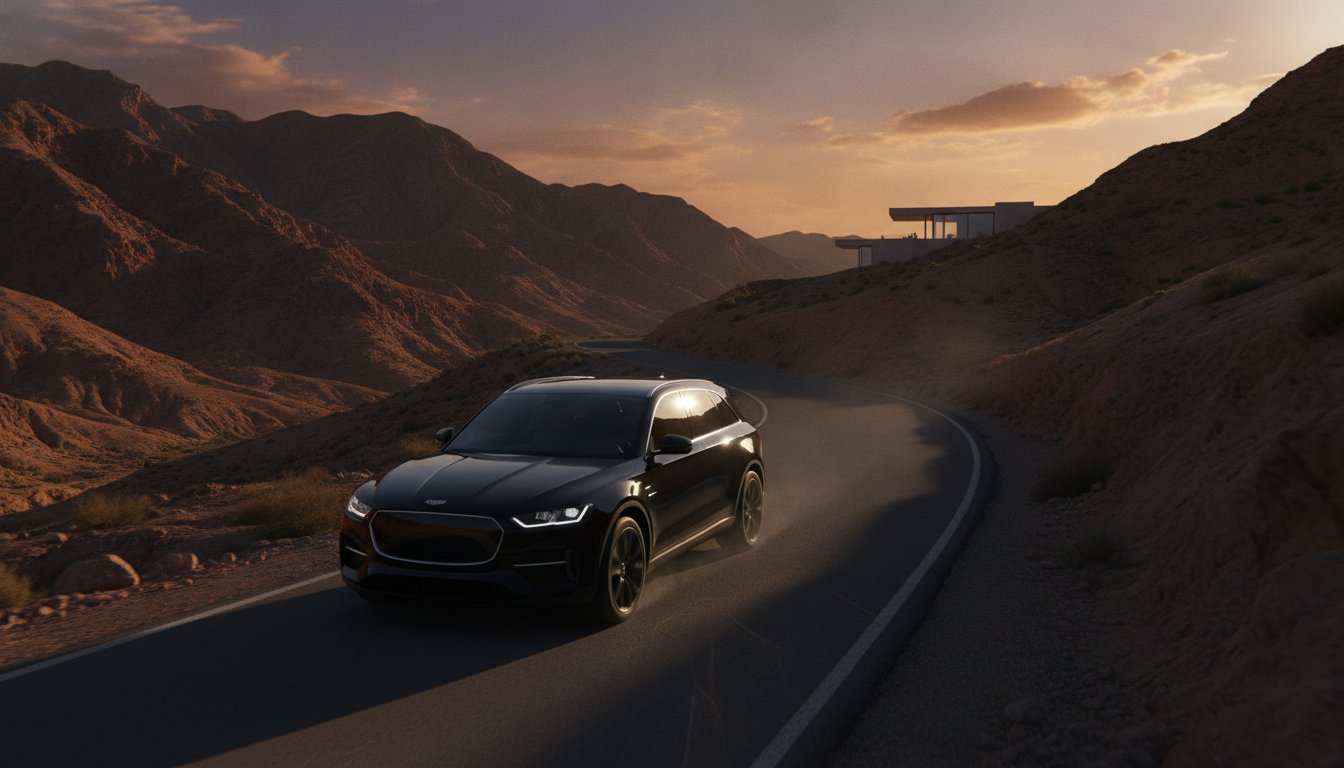
What if your 2026 Moroccan adventure didn't start with a $1,000 credit card hold or a frantic search for insurance fine print? Most travelers crave the freedom of the open road but feel paralyzed by confusing licensing laws and those notorious police checkpoints. It's a valid concern. Driving here is a "controlled freedom" that requires the right tech and a bit of insider knowledge. This guide helps you master the best driving routes in Morocco with total confidence. You'll spend more time at scenic overlooks and less time worrying about the paperwork.
We promise to give you the tools to navigate national highways like a local. You'll get a clear checklist for renting a vehicle, whether you need a rugged SUV for the desert or a nimble economy car for the coast. We also break down the legal essentials, including why an International Driving Permit is vital and how to handle $30 speeding fines legally. This preview covers everything from no-deposit rental platforms to the latest toll rates. Let's get you behind the wheel for a seamless journey through North Africa.
Key Takeaways
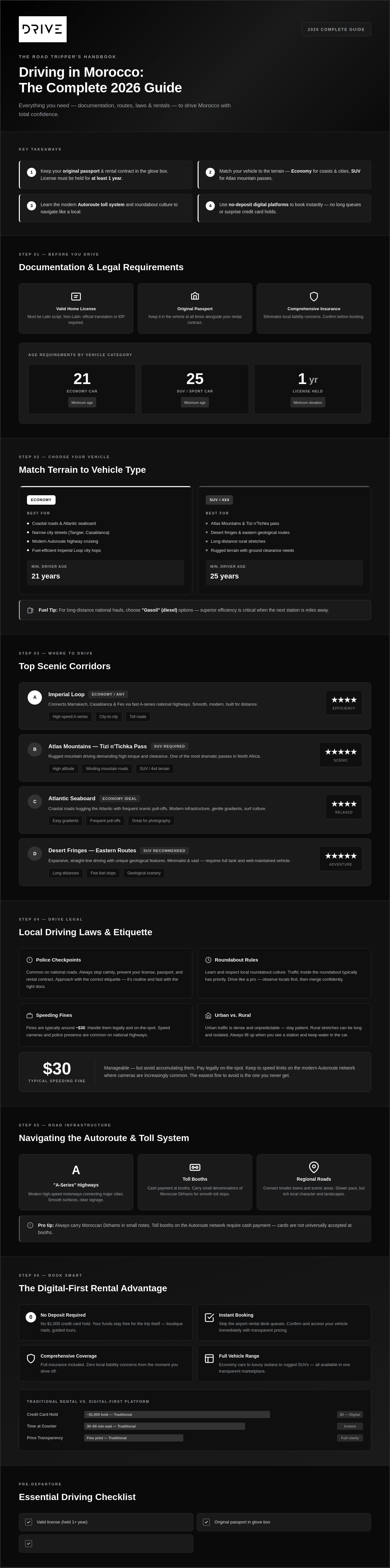
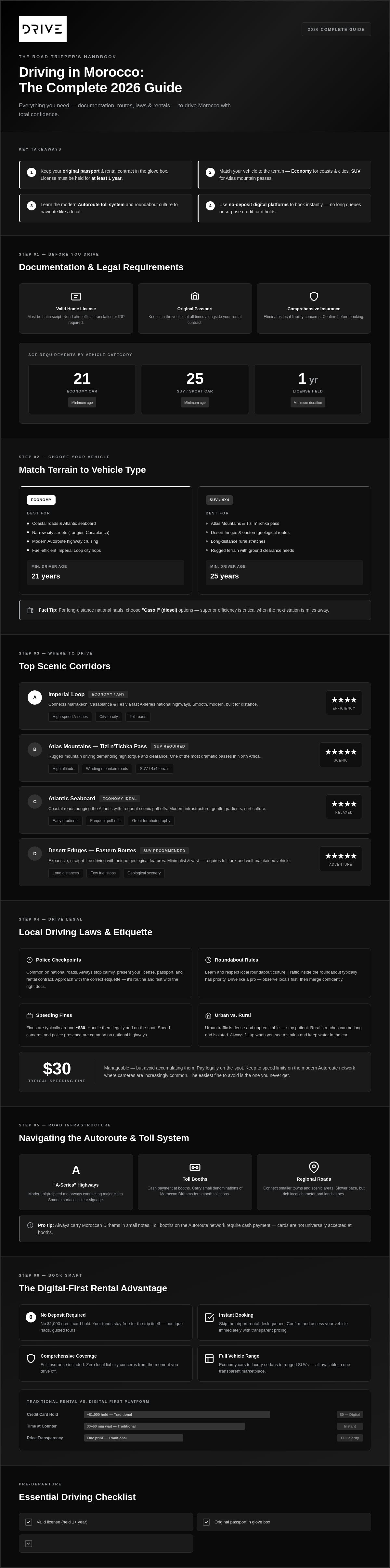
- Verify your driver's license validity and keep your original passport in the vehicle. Most rentals require a license held for at least one year to qualify.
- Explore the best driving routes in Morocco by matching your vehicle choice to the landscape. Choose an economy model for coastal cruises or an SUV for mountain passes.
- Learn to navigate the modern "Autoroute" system and regional roads efficiently. Understand how to handle tolls and approach police checkpoints with the correct etiquette.
- Master local right-of-way rules and roundabout culture to drive like a pro. Gain the confidence to handle urban traffic and rural stretches without the stress of the unknown.
- Ditch the heavy credit card deposits and old-school rental paperwork. Use digital-first platforms to secure instant bookings for everything from luxury sedans to rugged SUVs.
Essential Documentation and Vehicle Selection for Moroccan Roads
Preparation is the secret sauce for a legendary road trip. You don't want to be stuck at a desk when the mountains are calling. The best driving routes in Morocco require a blend of legal readiness and the right machine. In 2026, the savvy traveler uses digital platforms to bypass traditional rental counter friction. This means no more waiting in long lines at the airport. Instead, you get transparent pricing and immediate access to your vehicle. Always keep your original passport and rental contract in the glove box. It's a standard requirement for any stop.
Modern travel is about flexibility. Choosing a no-deposit platform keeps your cash where it belongs: in your pocket. This shift in the rental market allows you to allocate more funds to boutique riads or guided desert tours. Ensure your rental includes comprehensive insurance. This simple step eliminates local liability concerns and lets you focus on the scenery rather than potential repair costs. It's about building a sense of security before you even leave the parking lot.
To better understand this concept, watch this helpful video:
Licensing and Legal Requirements
Getting legal is quick. Most international tourists just need their valid home country license and passport. As long as it's been in your wallet for at least one year, you're set. If your license isn't in a Latin script, get an official translation or an International Driving Permit. It's a small task that prevents big headaches at checkpoints. Age matters too. You'll typically need to be 21 for an Economy Car Rental. If you're eyeing a Sport Car Rental or a larger SUV, that age requirement often jumps to 25. Check the legal guidelines to stay fully compliant before you book.
Choosing the Right Category for National Terrain
The geography here is a beautiful challenge. Morocco's road network connects vibrant cities to rugged peaks. Selecting the right vehicle is what makes the best driving routes in Morocco truly enjoyable. An Economy Car Rental is your best friend in the narrow streets of Tangier or along the breezy Atlantic coast. These cars are easy to park and sip fuel. But the mountains demand more. An SUV Rental provides the torque and clearance needed for the Tizi n'Tichka pass. If you're planning a long-distance national haul, look for "Gasoil" (diesel) options. They provide superior fuel efficiency, which is essential when the next station is miles away.
Top Scenic Corridors for a Moroccan Road Trip
Morocco’s geography is a masterclass in variety. You can transition from crashing Atlantic waves to jagged Atlas peaks in a single afternoon. Identifying the best driving routes in Morocco means understanding how the terrain dictates your pace and vehicle choice. Whether you want high-speed efficiency or winding mountain tracks, the 2026 road network is ready for you. It's a landscape that rewards the curious driver who isn't afraid to leave the city limits behind.
The Imperial Loop connects the cultural heartlands via the latest high-speed national highways. These "A-series" routes are the fastest way to bridge the gap between Marrakech, Casablanca, and Fes. They're smooth, modern, and built for distance. If you're heading toward the eastern edges, the Desert Fringes offer a different thrill. Expect expansive, straight-line driving where unique geological features dominate the horizon. It's a minimalist’s dream. The roads are generally excellent, but the sheer vastness requires a well-maintained vehicle and a full tank of fuel.
Coastal Routes and Atlantic Views
The Atlantic Seaboard is a favorite for those who love fresh salt air and easy cruising. You'll find well-maintained roads that hug the coastline, offering frequent scenic pull-offs for that perfect photo. It's an ideal stretch for an Economy Car Rental, as the infrastructure is modern and the gradients are gentle. This route perfectly blends vibrant surf culture with accessible driving. Just stay sharp during the spring months. Early morning coastal fog can roll in quickly, reducing visibility for a few hours before the sun burns it off.
If you find yourself drawn to these dramatic Atlantic vistas, you might also enjoy exploring the protected coastlines of Portugal; you can discover Geographic Algarve for specialized nature-based excursions in the Algarve's Natural Parks.
High Altitude Passes and Inland Hazards
The Mountainous Interior is where the driving gets technical. Prepare for hairpin turns and steep gradients that test your focus. These high-altitude passes offer some of the best driving routes in Morocco, but they demand respect. Always downshift frequently to manage your brake temperature on those long, winding descents. If you're visiting in winter, avoid these routes during active snowfalls unless you have a 4x4. It's always smart to check the UK government travel advice for Morocco for the latest on seasonal road closures and safety alerts. Consider an SUV Rental for these steeper inland gradients to ensure you have the necessary ground clearance and power.
Navigating the Modern Highway and Toll System
Speed meets precision on the Moroccan Autoroute. Morocco’s infrastructure has seen a massive upgrade, making long-distance travel surprisingly smooth. The "Autoroute" system, identified as A-series roads, is your ticket to fast travel between major hubs like Casablanca, Rabat, and Agadir. These are the arteries of the nation. They're designed for efficiency, cutting hours off your travel time compared to older routes. When you're mapping out the best driving routes in Morocco, you need to decide between speed and scenery.
National (N) roads offer a more local feel and beautiful landscapes, but expect more traffic and slower speeds. Regional (R) roads take you deeper into the heart of the country. Be ready for varied conditions here. While the A-series is pristine, rural roads can throw a few surprises your way. Always consult the U.S. Department of State travel advisory for Morocco for the latest updates on road safety and local traffic conditions. Signage is managed by Autoroutes du Maroc (ADM) and follows international standards. Blue signs guide you toward the highways, while green signs indicate national routes. It's a seamless system that makes navigation easy, even if you're new to the region.
The Autoroute Network and Jawaz Tags
Moroccan highways are world-class. You'll find a 120 km/h speed limit and regular rest areas with cafes and playgrounds. Tolls are part of the experience. You can pay in cash (Moroccan Dirhams) at every booth. For maximum efficiency, look for the "Jawaz" electronic tag lanes. These allow you to pass through dedicated lanes without stopping. Just remember that speed cameras are frequent and highly accurate. Stick to the posted limits to avoid on-the-spot fines that can disrupt your travel budget.
Fuel Logistics and Service Stations
Fueling up is easy. Reliable brands like Afriquia and Shell are found every 30 to 50 kilometers on major highways. Most stations are full-service. Pull up, and an attendant will assist you with the pump. It's common to give a small tip of a few Dirhams for the service. Diesel, known locally as "Gasoil," is the standard for most rental fleets. It offers the best range and efficiency for the best driving routes in Morocco. Always double-check your rental agreement to confirm if your vehicle takes Gasoil or Sans Plomb (unleaded) before you fill the tank.
Local Driving Laws and Cultural Etiquette
Mastering the unwritten rules of the road is just as important as knowing the best driving routes in Morocco. Driving here is a communicative experience. It's less about rigid lane discipline and more about constant awareness. You'll find that local drivers use their horns frequently. This isn't a sign of aggression. It's a friendly "I'm here" signal, especially when you're overtaking on narrow rural stretches. Keep your eyes on the road and your hand ready to give a quick tap on the horn to ensure everyone stays safe and informed.
Navigating the best driving routes in Morocco is a breeze once you understand the local etiquette. Speed limits change fast. You might be cruising at 100 km/h on a national road and suddenly hit a 40 km/h zone as you enter a small village. Radar checks are common in these transition zones. Stick strictly to the posted signs to avoid on-the-spot fines. Another quirk is the "Priorité à droite" (priority to the right) rule. In many urban roundabouts and intersections, traffic entering from the right has the right of way. It feels counterintuitive at first, so approach every junction with caution until you get the rhythm.
Handling Police and Gendarmerie Checkpoints
Checkpoints are a routine part of the landscape. You'll see "Halte Police" or "Gendarmerie" signs at city entrances and major intersections. Don't panic. Slow down to a crawl immediately. Stop at the line and wait for the officer to signal you forward. Often, they'll just wave tourists through with a smile. If they do stop you, be polite and have your license and rental contract ready. If you're issued a legitimate fine for a violation, always ask for an official receipt. It's a transparent process that keeps your trip moving smoothly.
The "Gardiens" and Parking Culture
Parking in Morocco is a managed service. In almost every town, you'll spot men in yellow or blue reflective vests. These are the "Gardiens." They help you park, watch your car, and ensure traffic flows. It's a reliable system that provides peace of mind. You don't pay when you arrive. Pay the Gardien when you're ready to leave. Typical rates range from 5 to 10 MAD for a few hours in city centers. For overnight parking, attendants are typically paid around 3 MAD in residential areas. It's a small price for knowing your vehicle is monitored while you explore. To start your journey with total peace of mind, book your vehicle with DriveCars.ai and skip the stress of traditional rental desks.
Streamlining Your Trip with DriveCars.ai
You have the map. You know the laws. Now you just need the keys to the best driving routes in Morocco. Traditional rental agencies often feel like they're stuck in the last century. They rely on slow paperwork and high-friction processes that eat into your vacation time. We've rebuilt the experience from the ground up. Our digital-first platform lets you book your vehicle instantly. It’s about moving fast so you can get to the good part: the drive.
We provide access to a diverse national fleet tailored for every Moroccan terrain. If you're sticking to the Atlantic coast, an Economy Car Rental is nimble and efficient. Planning to tackle the High Atlas passes? Our SUV Rental options give you the ground clearance and power you need. We also offer Luxury Car Rental and Sedan Rental for those long, smooth hauls on the A-series highways. Every booking comes with included insurance, giving you a sense of security from the moment you leave the lot. If your plans change, don't sweat it. You can enjoy free cancellation up to 24 hours before your scheduled pickup.
No-Deposit Rentals for International Travelers
Nobody likes seeing a massive hold on their credit card. It ties up your international travel budget and creates unnecessary anxiety. We've eliminated that hurdle. You can review our No-Deposit Policy to see how we prioritize total transparency. Our pricing is clear and upfront. This means no hidden fees at the airport or city pickup counter. You’ll know exactly what you’re paying before you even land. It’s a modern approach that respects your personal freedom and your wallet.
24/7 Support and National Coverage
Road trips are about the unexpected, but your support shouldn't be. Our multilingual team is available 24/7 to help you resolve any road logistics issues. We speak six languages, ensuring nothing gets lost in translation. Whether you’re picking up your car via Airport Car Delivery or at a city hub, the process is seamless. We’re here to help you master the best driving routes in Morocco with total confidence. If you need a bit more help with your 2026 itinerary, contact us for personalized road trip advice. We act as your trustworthy local guide, removing the friction from your journey.
Ready to Experience the Ultimate Moroccan Road Trip?
The road is open. You've got the knowledge to navigate everything from high-speed toll highways to the winding mountain passes of the interior. By mastering local etiquette like the "priority to the right" rule and understanding the role of parking Gardiens, you're already ahead of most travelers. You know how to select the perfect vehicle for the best driving routes in Morocco, whether that's a rugged SUV for the peaks or a sleek economy model for the coast. It's time to leave the planning behind and start driving.
Now it's time to remove the last bit of friction. Forget about massive credit card holds and outdated paperwork. Our platform offers no-deposit rental options and 24/7 multilingual support to keep your journey smooth. If your 2026 plans shift, we offer free cancellation up to 24 hours before your pickup. You're ready to explore with total confidence and zero stress. The vibrant markets of Marrakech and the sea breezes of Agadir are just a drive away.
Book your no-deposit rental car in Morocco today and start your adventure. The horizon is waiting for you.
Frequently Asked Questions
Is it safe for a tourist to drive in Morocco?
Driving in Morocco is generally safe and comparable to Southern Europe on major highways. You'll find modern infrastructure and clear signage on the best driving routes in Morocco. Urban centers require more focus due to high volumes of pedestrians and scooters, so stay alert and patient. Avoid driving at night on rural roads where lighting is limited and stray animals can occasionally wander onto the tarmac.
Do I need an International Driving Permit (IDP) for Morocco?
You should carry an IDP if your license isn't in a Latin, French, or Arabic script. While many agencies accept EU or US licenses, an IDP is legally recommended and simplifies interactions at police checkpoints. It acts as an official translation that prevents any confusion during document checks. Keeping both your original license and the permit together ensures you meet all local requirements without any hassle at the rental desk.
Can I rent a car in Morocco without a credit card or deposit?
Yes, it's now possible to rent without a credit card deposit by using digital-first marketplaces. These platforms eliminate the standard 3,000 to 10,000 MAD holds that traditional agencies require. This modern approach keeps your travel funds accessible for your actual trip expenses rather than being locked up in a security bond. It’s a game-changer for travelers who want to manage their budget with total transparency and zero friction.
What are the speed limits on Moroccan highways?
Speed limits are 120 km/h on highways (autoroutes), 100 km/h on national roads, and 60 km/h in urban zones. Limits often drop suddenly to 40 km/h when entering small towns or construction areas. Radar cameras are frequent and highly accurate, so stay vigilant and watch for signs to avoid unexpected fines. Always adjust your speed based on road conditions, especially on winding mountain passes or during rainy weather.
What should I do if I get a speeding fine in Morocco?
You should pay the fine immediately and request an official receipt. Speeding fines typically start from 300 MAD and are often payable on the spot in cash to the officer. It’s a transparent, legal process. Keeping your receipt ensures you have proof of payment if the rental agency asks later. Don't forget that officers are generally professional and follow strict protocols during these interactions.
Are road signs in Morocco easy for tourists to read?
Yes, road signs are easy to read because they follow international standards and use both Arabic and French. Blue signs indicate the high-speed autoroutes, while green signs point toward national routes. The iconography is identical to what you’d find in Europe, making navigation intuitive for most international drivers. You'll find that distances are clearly marked in kilometers, helping you plan your fuel stops and rest breaks effectively.
Is GPS necessary for driving across the country?
GPS is essential for navigating the best driving routes in Morocco, especially when exploring the Atlas Mountains or finding specific riads. While highway signage is excellent, Google Maps or Waze help you bypass heavy traffic in cities like Casablanca and Marrakech. We recommend downloading offline maps before you head into remote desert regions where mobile signals can be unreliable. It ensures you never miss a scenic turn-off.
What happens if my rental car breaks down on a national road?
You should contact your rental provider’s 24/7 support line immediately for assistance. Most reputable services include roadside assistance in their insurance packages to handle mechanical issues. Stay with your vehicle and use a reflective triangle to alert other drivers on the road. Multilingual support teams can coordinate a tow or a replacement vehicle quickly to ensure your itinerary stays on track without major delays.